
The profound technology impact on daily life extends far beyond mere convenience into territories affecting our fundamental wellbeing. From the moment morning alarms activate until late night scrolling sessions end, digital devices orchestrate human behavior in ways most people never consciously recognize.
This comprehensive guide examines the multifaceted technology impact on daily life through scientific lenses revealing critical connections. We explore how screen time and sleep quality interact destructively, why digital wellness strategies matter more than ever, and what cognitive performance research demonstrates about smartphone addiction effects on productivity levels.
Whether you struggle with work life balance technology challenges or simply want understanding how devices influence mental health and technology relationships, this evidence based exploration provides essential insights. Leading psychologists and neuroscientists confirm that awareness represents the first step toward reclaiming control.
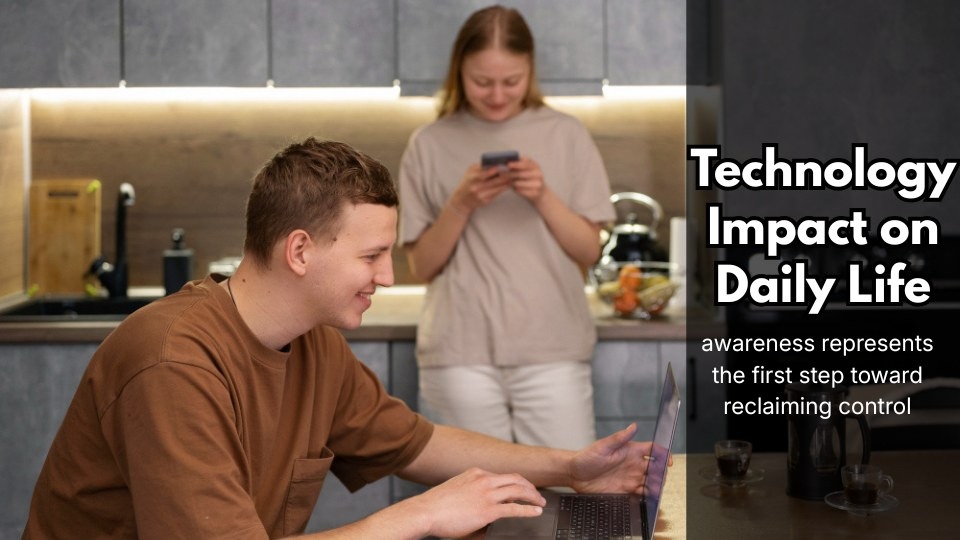
Understanding How Technology Impact on Daily Life Shape Modern Human Existence
The technology impact on daily life encompasses every interaction between humans and digital systems that shape behavior patterns, cognitive functions, and emotional states. This influence operates continuously through smartphones, computers, wearables, and countless connected devices embedded throughout contemporary environments.
Research from the Pew Research Center indicates that 97 percent of Americans now own smartphones, with average usage exceeding four hours daily. This unprecedented connectivity fundamentally alters how people work, communicate, learn, and even rest. Understanding these dynamics requires examining specific domains where digital wellness strategies become essential.
The Neurological Basis of Digital Dependency
Human brains evolved over millions of years responding to natural environmental stimuli. Modern technology hijacks these ancient reward systems through carefully engineered notification patterns and variable reinforcement schedules. Dopamine releases triggered by social media interactions create neurochemical patterns resembling substance addiction mechanisms.
Cognitive performance research demonstrates measurable changes in attention spans among heavy technology users. The constant availability of information reduces motivation for deep memorization while simultaneously fragmenting sustained focus capabilities. These neurological adaptations represent significant technology impact on daily life often invisible to those experiencing them.
Historical Context of Human Technology Relationships
Humanity has always adapted to technological innovations, though current acceleration exceeds all historical precedents. The printing press required centuries to transform society fundamentally. Radio and television reshaped culture over decades. Smartphones achieved global behavioral modification within merely fifteen years.
The technology impact on daily life intensified dramatically following the 2007 iPhone introduction. Within a single generation, these devices became extensions of human cognition, storing memories, managing relationships, and mediating virtually every daily activity. This rapid integration left insufficient time for developing healthy usage norms.
From Tools to Extensions of Self
Earlier technologies maintained clear boundaries between device and user. Telephones stayed in homes. Computers occupied offices. Current devices accompany users everywhere, blurring distinctions between connected and disconnected states entirely.
This constant companionship creates what researchers term ambient awareness, perpetual low level attention directed toward potential device interactions. Mental health and technology studies reveal this divided attention contributes significantly to anxiety and reduced present moment awareness across all age demographics.
The Critical Importance of Understanding These Dynamics
Recognizing technology impact on daily life empowers individuals to make conscious choices rather than defaulting to algorithmically optimized behaviors. Without awareness, people surrender decision making authority to systems designed primarily for engagement maximization rather than user wellbeing.
Work life balance technology challenges affect professional performance and personal relationships simultaneously. Remote work capabilities, while offering flexibility, often eliminate boundaries previously maintained through physical separation. Many employees report feeling perpetually on call, unable to fully disengage from professional responsibilities.
Why This Knowledge Matters Now
Current generations face digital wellness strategies decisions with lifelong consequences. Children developing amid constant connectivity exhibit different cognitive patterns than previous generations. Understanding these differences enables parents, educators, and policymakers to guide healthy development appropriately.
- Average teenagers spend over seven hours daily consuming screen based media excluding educational content
- Adults check smartphones approximately 96 times daily according to recent behavioral tracking studies
- Blue light exposure before sleep delays melatonin production by up to three hours significantly
- Multitasking between devices reduces effective cognitive performance by approximately 40 percent measurably
- Social media usage correlates with increased depression and anxiety rates across multiple longitudinal studies
Benefits Technology Provides When Used Intentionally
Despite legitimate concerns, technology impact on daily life includes remarkable advantages unavailable to previous generations. Access to unlimited information, global communication capabilities, and powerful productivity tools represent genuine progress worth preserving through thoughtful implementation approaches.
Healthcare monitoring through wearable devices enables early detection of cardiac irregularities, sleep disorders, and activity deficiencies. Patients managing chronic conditions benefit from continuous tracking impossible through traditional periodic appointments alone. Screen time and sleep quality applications help users identify problematic patterns requiring adjustment.
Positive Applications Supporting Human Flourishing
Educational technology democratizes access to knowledge previously limited to elite institutions. Students worldwide access lectures from leading professors, interactive simulations, and collaborative learning platforms connecting diverse perspectives across geographical boundaries.
Mental health and technology intersect positively through meditation applications, therapy platforms, and support communities connecting individuals facing similar challenges. Research validates that consistent digital mindfulness practice produces measurable stress reduction and emotional regulation improvements comparable to traditional approaches.
Challenges Requiring Conscious Navigation
The technology impact on daily life presents genuine obstacles demanding proactive management strategies. Smartphone addiction effects manifest through compulsive checking behaviors, anxiety during device separation, and prioritization of virtual interactions over present relationships.
Sleep disruption represents perhaps the most universally experienced negative consequence. Screen time and sleep quality research conclusively demonstrates that evening device usage delays circadian rhythms, reduces sleep duration, and diminishes restorative sleep stage quality significantly.

Navigating the Attention Economy
Technology companies employ thousands of behavioral psychology experts specifically to maximize engagement metrics. These professionals understand cognitive vulnerabilities intimately, designing interfaces exploiting human psychological tendencies systematically.
- Infinite scroll features eliminate natural stopping points that previously concluded media consumption sessions
- Notification systems create intermittent reinforcement patterns proven most resistant to extinction behaviorally
- Social validation metrics trigger comparison behaviors linked to decreased self esteem consistently
- Autoplay functions override conscious viewing decisions through momentum and reduced friction deliberately
- Personalization algorithms create filter bubbles reinforcing existing beliefs while limiting exposure to diverse perspectives
Real World Strategies for Technology Impact on Daily Life
Managing technology impact on daily life requires systematic approaches rather than relying on willpower alone. Environmental modifications prove more effective than attempting resistance against deliberately addictive design patterns repeatedly.
Cognitive performance research supports designated device free periods allowing sustained focus on complex tasks. Many professionals report dramatic productivity improvements after implementing morning routines excluding email and social media until completing priority work items.
Digital wellness strategies including grayscale display settings, notification restrictions, and physical device separation during sleep hours yield measurable improvements across multiple wellbeing indicators. Small consistent changes accumulate into significant lifestyle improvements over time.
The technology impact on daily life will only intensify as artificial intelligence, virtual reality, and brain computer interfaces mature. Developing healthy foundational habits now prepares individuals for navigating increasingly immersive technological environments ahead successfully.
Conclusion:
The technology impact on daily life shapes sleep patterns, productivity levels, and mental health outcomes in ways demanding conscious awareness. Throughout this guide, we examined neurological effects of digital dependency, explored screen time and sleep quality connections, and provided practical digital wellness strategies for healthier integration.
From smartphone addiction effects to work life balance technology challenges, understanding these dynamics empowers informed decision making. While devices offer remarkable benefits, intentional usage boundaries remain essential for protecting cognitive performance and emotional wellbeing.
As technology’s impact on daily life continues intensifying, developing sustainable habits today ensures thriving in increasingly connected tomorrows. Your digital choices matter profoundly.