
The difference between skincare and makeup comes down to one fundamental distinction: skincare treats and protects your skin over time, while makeup temporarily changes how your skin looks on the surface. Skincare products contain active ingredients designed to absorb into your skin and create real biological change, such as increased hydration, reduced acne, or slower aging. Makeup sits on top of your skin and alters your appearance through pigments, light reflection, and coverage, then washes off at the end of the day.
Understanding this distinction matters because it affects how you spend your money, what results you can realistically expect, and in what order you should apply your products. This guide explains exactly how each category works, which products fall into which category, where the gray areas are, and how to build a routine that gets the most from both.
Table of Contents
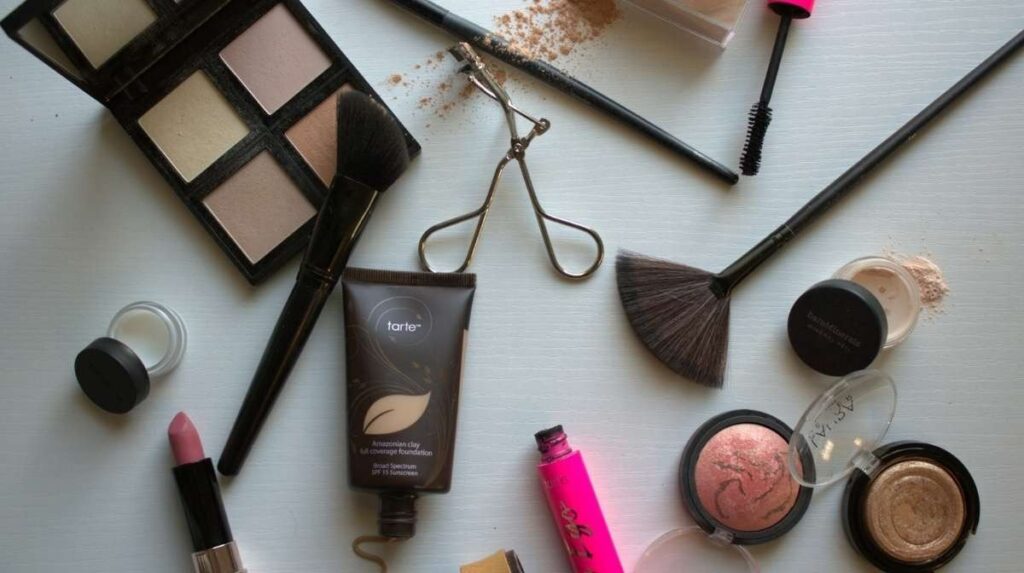
What Is Skincare? Definition and How It Works
Skincare refers to products formulated with active ingredients that absorb into the skin to treat, protect, or improve its condition over time.
These products work below the surface. Ingredients like retinol, niacinamide, hyaluronic acid, vitamin C, and alpha hydroxy acids are formulated at specific concentrations and pH levels to penetrate the outermost skin layer (the stratum corneum) and trigger biological responses such as increased collagen production, accelerated cell turnover, or strengthened moisture barrier function.
The FDA draws a clear legal line here. Under the Federal Food, Drug, and Cosmetic Act, any product intended “to affect the structure or any function of the body” is classified as a drug, not a cosmetic. This means that products like prescription retinoids, acne treatments containing salicylic acid, and sunscreens are technically regulated as drugs (or drug/cosmetic combinations) because they alter how your skin functions.
Common Skincare Product Categories
Here are the main types of skincare products and what each one does:
Cleansers remove dirt, oil, makeup residue, and environmental pollutants. They prepare the skin to absorb treatment products.
Toners and essences balance the skin’s pH after cleansing and deliver lightweight hydration or mild active ingredients.
Serums are concentrated formulations packed with active ingredients like vitamin C, retinol, or niacinamide. They are the workhorses of any skincare routine because their lightweight consistency allows deeper penetration.
Moisturizers seal in hydration and strengthen the skin’s lipid barrier through ingredients like ceramides, fatty acids, and humectants.
Sunscreen protects against UV radiation, which is the single largest external cause of premature aging and skin cancer. The American Academy of Dermatology recommends broad spectrum SPF 30 or higher applied daily, regardless of weather or skin tone.
Treatment products include prescription retinoids, chemical exfoliants, and targeted serums for specific concerns like hyperpigmentation or acne.
What Is Makeup? Definition and How It Works
Makeup consists of products designed to temporarily alter your appearance through color, coverage, and optical effects without changing your skin’s underlying structure.
According to the FDA’s regulatory framework, cosmetics are defined as products intended for “cleansing, beautifying, promoting attractiveness, or altering the appearance.” Unlike skincare, pure makeup products are not designed to penetrate the skin or trigger biological changes. They use pigments, binders, film forming agents, and light reflecting particles to create visual effects on the surface.
Common Makeup Product Categories
Foundation and concealer provide coverage by depositing pigment over the skin to even out tone, mask blemishes, and create a uniform base.
Blush, bronzer, and highlighter add dimension and color to the face through pigment placement and light manipulation.
Eye makeup (eyeshadow, eyeliner, mascara) enhances the eye area through color and definition.
Lip products (lipstick, gloss, liner) add color and texture to the lips.
Setting products (powder, setting spray) extend the wear time of other makeup by controlling oil and reducing transfer.
None of these products are designed to change how your skin functions at a cellular level. Their effects are immediate, visible, and entirely reversible once removed.
Side by Side Comparison: Skincare vs Makeup
This table summarizes the core distinctions between the two categories.
| Factor | Skincare | Makeup |
| Primary purpose | Treat, protect, and improve skin health | Enhance appearance temporarily |
| How it interacts with skin | Absorbs into skin layers | Sits on the skin’s surface |
| Duration of effect | Cumulative results over weeks and months | Temporary, removed daily |
| Key ingredients | Retinol, niacinamide, AHAs, vitamin C, SPF | Pigments, mica, iron oxides, polymers |
| FDA classification | Often drug or drug/cosmetic combination | Cosmetic (no pre market approval required) |
| When you see results | Gradual improvement over 4 to 12 weeks | Immediate visual change |
| Application order | Applied first, directly onto clean skin | Applied last, over skincare layers |
| Removal | Some products stay on (moisturizer, SPF) | Must be fully removed before sleep |
| Long term impact | Improves skin condition over time | No lasting change to skin health |
| Example products | Vitamin C serum, retinol cream, sunscreen | Foundation, mascara, lipstick |
Where It Gets Confusing: Hybrid Products and the Gray Area
Many modern products blur the line between treatment and coverage, which is where most consumers get confused.
Tinted moisturizers combine lightweight coverage with hydrating ingredients and sometimes SPF. These are true hybrid products: part skincare (moisturizer, sunscreen) and part makeup (tinted pigments for coverage).
BB and CC creams were originally developed in Korean and German dermatology as post procedure recovery products. They typically contain skincare active ingredients alongside pigments. However, the actual concentration of active ingredients varies wildly between brands, and many BB creams marketed in Western countries are essentially lightweight foundations with minimal treatment benefit.
SPF foundations offer sun protection while providing coverage. The FDA classifies sunscreen as an over the counter drug, so any foundation claiming SPF protection must meet drug manufacturing standards for that ingredient, even though the rest of the product functions as a cosmetic.
Skincare infused makeup is a growing category where brands add ingredients like hyaluronic acid, niacinamide, or peptides to foundations and concealers. While these ingredients are beneficial in skincare formulations, their effectiveness in makeup is debatable. Skincare actives need specific concentrations, pH levels, and contact time to work. When suspended in a pigment heavy cosmetic formula that sits on the surface and gets removed after several hours, the treatment benefit is likely minimal compared to a dedicated serum or moisturizer.
The practical takeaway: hybrid products are convenient, but they rarely replace dedicated skincare. Treat them as makeup with a small skincare bonus rather than skincare that also provides coverage.
What Should You Apply First? The Correct Order Explained
Apply skincare first, then makeup. Always.
The logic is straightforward: skincare products need direct contact with clean skin to absorb and deliver their active ingredients. If you apply foundation before serum, the pigment layer acts as a physical barrier preventing the active ingredients from reaching the cells they need to treat.
Morning Routine Order
- Cleanser (gentle, non stripping)
- Toner or essence (optional, for hydration and pH balance)
- Serum (vitamin C, niacinamide, or other targeted active)
- Moisturizer (lightweight for day)
- Sunscreen (SPF 30 or higher, always the last skincare step)
- Primer (optional, first makeup step)
- Foundation, concealer, and remaining makeup
Evening Routine Order
- Makeup remover or cleansing oil (first cleanse to dissolve makeup)
- Water based cleanser (second cleanse to remove residue)
- Exfoliant or treatment (retinol, AHA, BHA, used on alternate nights)
- Serum (targeted treatment)
- Moisturizer or night cream (richer formula for overnight repair)
Double cleansing at night is essential if you wear makeup. Leftover foundation, concealer, and setting powder can clog pores and prevent your evening treatment products from absorbing properly. An oil based first cleanse dissolves the cosmetics, and a water based second cleanse removes any remaining residue.
Should You Invest More in Skincare or Makeup?
Prioritize skincare over makeup if you have to choose. Healthy, well maintained skin requires less coverage and makes every cosmetic product perform better.
This is the most practical implication of understanding the distinction between treatment and coverage. A quality cleanser, a targeted serum, a solid moisturizer, and daily sunscreen create a foundation that no amount of expensive foundation can replicate. When your skin is hydrated, even toned, and protected from UV damage, you naturally need less concealer, fewer color correcting products, and lighter coverage overall.
That said, makeup is not the enemy. It serves a completely valid purpose: self expression, confidence, creativity, and looking polished for occasions where presentation matters. The smartest approach is building a strong skincare base first, then adding makeup on top as enhancement rather than correction.
How to Allocate Your Budget Wisely
If your budget is limited, here is where to prioritize your spending:
Spend more on: Sunscreen (the single most impactful anti aging product you can buy), targeted serums with proven active ingredients like retinol or vitamin C, and a gentle cleanser that does not strip your skin.
Spend less on: Expensive cleansers (they rinse off immediately, so premium ingredients have minimal contact time), luxury moisturizers (mid range options with ceramides perform comparably to high end alternatives), and trendy products without proven actives.
Makeup spending tip: Invest in a quality foundation shade match and primer, and save on items like eyeshadow palettes and lip products where drugstore options perform nearly as well as luxury alternatives.
Common Mistakes People Make When Combining Both
Even people who understand the basic categories often fall into avoidable traps.
Skipping sunscreen because their foundation has SPF. Most people apply far less foundation than the amount needed for the labeled SPF to be effective. The American Academy of Dermatology recommends a nickel sized amount of sunscreen for the face alone. Foundation applied that thickly would look cakey and unnatural. Always use a dedicated sunscreen under your makeup.
Sleeping in makeup. Leaving cosmetics on overnight traps oil, dead skin cells, and environmental pollutants against your skin for hours, increasing the risk of clogged pores, breakouts, and irritation. Even on exhausting nights, a quick cleansing wipe is better than nothing.

Relying on “skincare makeup” to replace an actual routine. A foundation containing hyaluronic acid is not a substitute for a dedicated hydrating serum. The concentration of active ingredients in cosmetic formulations is typically too low to deliver meaningful treatment results, and the product is removed after several hours anyway.
Applying treatment products over makeup. Facial mists and setting sprays marketed as “hydrating” do not deliver meaningful skincare benefits when sprayed over layers of powder and pigment. Active ingredients need clean, bare skin to absorb effectively.
Over cleansing to remove heavy makeup. Aggressive scrubbing with harsh cleansers damages your moisture barrier. Instead, use a gentle oil based cleanser first to dissolve makeup, followed by a mild water based cleanser. This double cleansing method removes everything without stripping protective oils.
When to See a Dermatologist Instead of Buying More Products
Some skin concerns cannot be addressed by either over the counter skincare or cosmetic coverage.
Persistent acne that does not respond to salicylic acid or benzoyl peroxide after 8 to 12 weeks of consistent use often requires prescription treatment. Sudden changes in skin texture, unexplained rashes, or moles that change shape or color should always be evaluated by a board certified dermatologist rather than masked with concealer.
The FDA notes that products claiming to treat or prevent disease cross into drug classification territory. If your skin concern is medical in nature, no cosmetic or over the counter skincare product is a substitute for professional diagnosis and prescription treatment.
Conclusion
The difference between skincare and makeup is fundamentally about function. Skincare absorbs into your skin and creates cumulative, long lasting improvement in hydration, clarity, firmness, and protection. Makeup sits on the surface and temporarily enhances your appearance through pigments and coverage. Both serve valuable purposes, but they are not interchangeable, and understanding this distinction helps you spend your money wisely, build an effective routine, and set realistic expectations for what each product can deliver.
The most effective approach is treating skincare as your non negotiable foundation and makeup as the optional finishing touch. Apply treatment products first on clean skin, always use dedicated sunscreen under your cosmetics, double cleanse every evening, and never rely on makeup to solve problems that skincare (or a dermatologist) should address.
If this guide helped clarify the distinction, share it with a friend who is still trying to figure out their routine. And if you have a question about where a specific product falls, drop it in the comments below.
Can makeup replace a skincare routine?
No. Makeup is designed to change your appearance temporarily, not to treat or protect your skin. Even “skincare infused” cosmetics do not deliver active ingredients at the concentrations or contact times needed for meaningful biological results. A basic skincare routine (cleanser, moisturizer, sunscreen) is essential regardless of whether you wear makeup.
What goes first, skincare or makeup?
Skincare always goes first. Active ingredients in serums, moisturizers, and sunscreens need direct contact with clean skin to absorb properly. Apply all skincare steps first, allow each layer to absorb for 30 to 60 seconds, and apply primer and makeup only after your sunscreen has fully set.
Is tinted moisturizer considered skincare or makeup?
Tinted moisturizer is a hybrid product that falls into both categories. The moisturizing and SPF components function as skincare, while the tinted pigments function as makeup. It is a convenient two in one option for light coverage days, but it should not replace your dedicated serum or standalone sunscreen.
Does wearing makeup every day damage your skin?
Wearing makeup daily does not inherently damage healthy skin, as long as you remove it thoroughly every evening and maintain a consistent skincare routine underneath. Problems arise when makeup is left on overnight, applied over dirty skin, or used as a substitute for proper hydration and sun protection.
Should I spend more on skincare or makeup?
Most dermatologists recommend investing more in skincare, particularly sunscreen, serums with proven active ingredients, and a quality cleanser. Healthy skin requires less coverage, which means your makeup performs better and you need less of it. Mid range and drugstore makeup products often deliver comparable results to luxury alternatives for color cosmetics.
What is the difference between cosmetics and skincare products legally?
Under theFederal Food, Drug, and Cosmetic Act, cosmetics are products intended to alter appearance, while products intended to affect the body’s structure or function are classified as drugs. Many skincare products (sunscreens, acne treatments, anti dandruff shampoos) are regulated as drugs or drug/cosmetic combinations, which means they must meet stricter manufacturing and labeling requirements than pure cosmetics.