Fully automated vertical farming represents a revolutionary leap in agricultural technology, transforming how we grow food in an increasingly urbanized world. As global populations surge and arable land becomes scarcer, this innovative approach stacks crops in towering indoor facilities where robotic systems handle everything from planting to harvesting. These high-tech farms utilize advanced sensors, artificial intelligence, and precision control systems to optimize growing conditions 24/7, eliminating the unpredictability of traditional farming. By combining LED grow lights, climate control, and automated nutrient delivery, these facilities can produce yields up to 390 times higher than conventional farms while using 95% less water.
This article explores how fully automated vertical farming is reshaping agriculture through cutting-edge technology, examining the systems that make it possible, its environmental benefits, and why this soilless cultivation method might hold the key to feeding tomorrow’s cities sustainably.
What Is Fully Automated Vertical Farming?
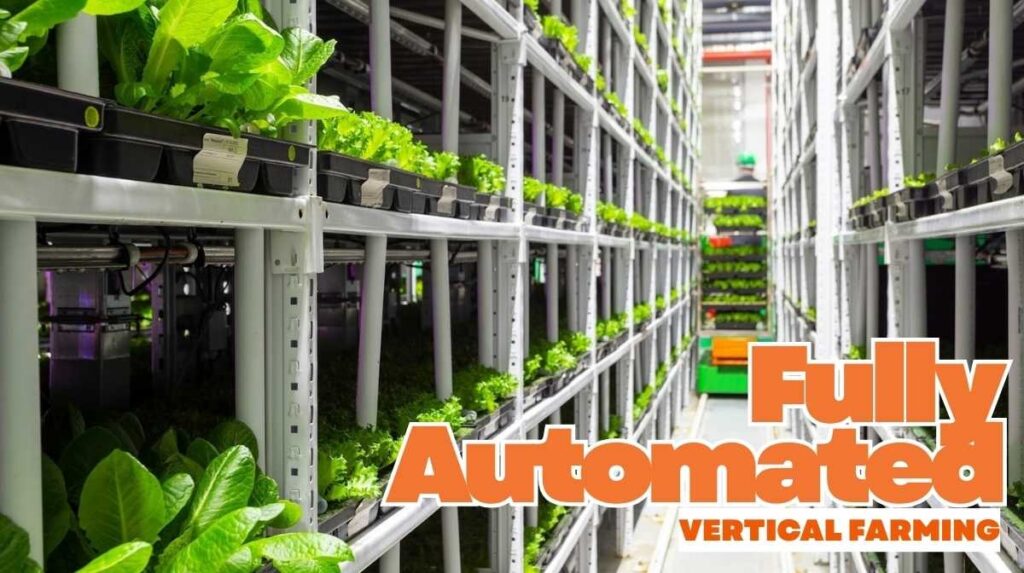
Fully automated vertical farming is an advanced agricultural system where crops grow in stacked layers within climate-controlled environments, managed entirely by sophisticated technology. Unlike traditional farming, these facilities rely on hydroponic systems, aeroponics, or aquaponics to deliver nutrients directly to plant roots without soil. Computer algorithms monitor and adjust every aspect of the growing process, from temperature and humidity to nutrient concentration and light exposure.
These farms operate as closed-loop ecosystems where AI-powered automation handles tasks traditionally performed by human farmers. Sensors collect real-time data on plant health, growth rates, and environmental conditions, allowing the system to make instant adjustments for optimal yields.
The Evolution of Vertical Agriculture
Early Development
The concept of vertical farming emerged in 1999 when Columbia University professor Dickson Despommier proposed growing food in urban skyscrapers. Initial experiments focused on simple stacked growing systems with manual operation. By 2010, the first commercial indoor farming facilities opened in Singapore and Japan, though they required significant human intervention.
Technological Breakthroughs
The integration of machine learning algorithms and robotics in the late 2010s marked a turning point. Companies like AeroFarms and Plenty introduced:
- Advanced LED lighting systems that mimic natural sunlight patterns
- Automated seeding and transplanting robots
- Computer vision for disease detection
- Predictive analytics for harvest optimization
Key Components of Automated Growing Systems
Smart Environmental Control
Precision agriculture technology maintains ideal growing conditions through interconnected systems. Temperature sensors trigger cooling or heating mechanisms automatically, while humidity controllers prevent fungal growth and optimize transpiration rates. Carbon dioxide injection systems enhance photosynthesis during peak growing periods.
Robotic Harvesting Solutions
Vision-Guided Robots
Modern harvesting robots use computer vision to identify ripe produce, determining the perfect harvest time based on color, size, and texture analysis. These machines can work continuously, picking delicate leafy greens without bruising or contamination.
Automated Packaging Systems
Post-harvest robots sort, wash, and package produce immediately after picking. This farm-to-table automation reduces handling time and maintains freshness while eliminating human contact that could introduce pathogens.
Benefits of High-Tech Agricultural Systems
Fully automated vertical farming offers transformative advantages over conventional agriculture. These facilities produce consistent yields regardless of weather conditions or seasonal changes. A single controlled environment agriculturefacility can generate the equivalent of hundreds of acres of farmland while occupying a fraction of the space.
Water conservation stands out as a critical benefit. Recirculating irrigation systems capture and reuse water, reducing consumption by up to 95% compared to field farming. Additionally, these farms eliminate agricultural runoff, preventing fertilizer and pesticide contamination of water sources.
The absence of pesticides in it creates healthier produce while protecting ecosystems. Since these facilities operate in sealed environments, pests and diseases cannot enter, eliminating the need for chemical interventions.
Challenges Facing Implementation
Economic Barriers
Initial setup costs for automated growing towers remain substantial. Building a commercial-scale facility requires millions in investment for:
- LED lighting arrays
- Climate control infrastructure
- Robotic systems
- Monitoring sensors
- Backup power systems
Energy consumption presents another significant expense. Although LED technology has improved efficiency, lighting and climate control still account for 25-30% of operational costs.
Technical Limitations
Current agricultural robotics excel at handling leafy greens and herbs but struggle with larger crops like tomatoes or peppers. Programming robots to handle diverse crop types without damage requires ongoing development and refinement.
Real-World Success Stories
Singapore’s Sky Greens operates one of the world’s most successful fully automated vertical farming facilities, producing over 1,000 pounds of vegetables daily. Their sustainable farming practices supply fresh produce to local supermarkets, reducing the nation’s food import dependency.
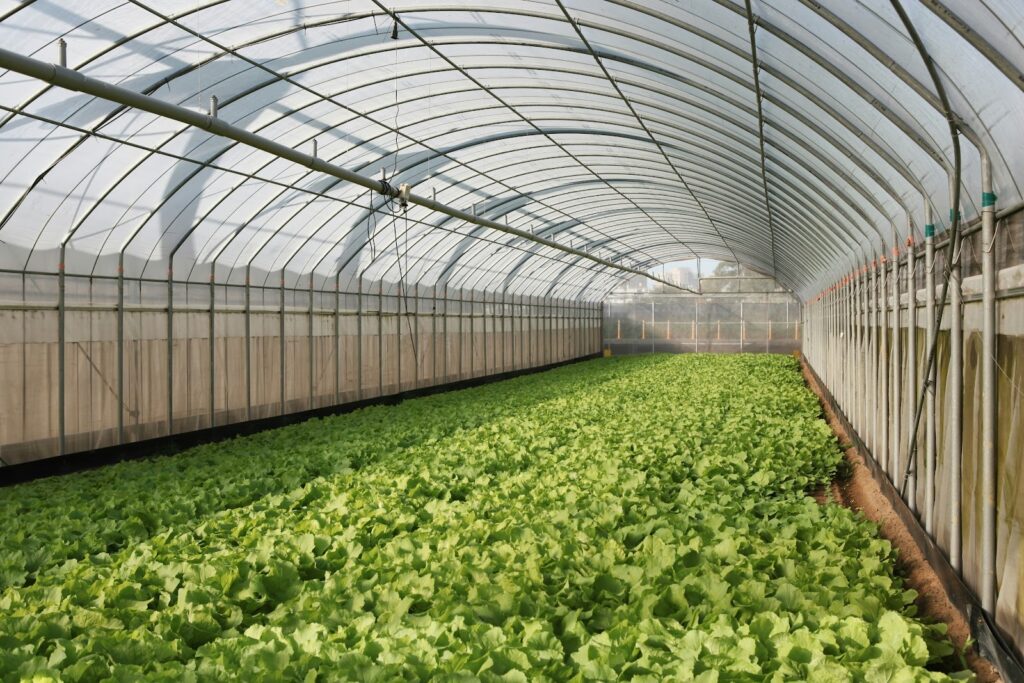
In the United States, AppHarvest’s Kentucky facility spans 60 acres of greenhouse automation, using AI and robotics to grow tomatoes year-round. Their system reduces water usage by 90% while producing 30 times more yield per square foot than traditional farms.
Japan’s Spread Company revolutionized lettuce production with their Techno Farm, where robots handle everything from seeding to packaging. This urban agriculture solution produces 30,000 heads of lettuce daily, demonstrating the scalability of automated vertical systems.
These pioneering facilities prove that fully automated vertical farming can address food security challenges while minimizing environmental impact. As technology costs decrease and efficiency improves, these systems will become increasingly viable for feeding growing urban populations sustainably.
Conclusion
Fully automated vertical farming stands at the forefront of agricultural innovation, offering solutions to pressing challenges like food security, water scarcity, and urban expansion. As technology costs decline and smart farming systems become more sophisticated, these high-tech farms will play an increasingly vital role in sustainable food production. The combination of AI, robotic cultivation, and controlled environments promises fresher, pesticide-free produce while dramatically reducing environmental impact. Whether you’re an investor, farmer, or conscious consumer, staying informed about fully automated vertical farming and precision agriculture developments will help you understand and participate in this agricultural revolution that’s reshaping how we feed our world.