The emergence of taste technologies is fundamentally transforming how we create, experience, and personalize food across the globe. From silicon valley startups to multinational food corporations, innovators are deploying sophisticated systems that decode human flavor preferences with unprecedented precision.
This comprehensive guide explores the fascinating convergence where artificial intelligence in food meets sensory science innovation. We examine how flavor profiling algorithms analyze millions of taste combinations, why digital gastronomy represents the next frontier in culinary arts, and what food tech disruption means for restaurants, manufacturers, and consumers worldwide.
Whether you work in the food industry, follow culinary innovations, or simply wonder how taste technologies will shape future eating experiences, understanding this revolution provides essential insights. Leading researchers and industry pioneers confirm we stand at the beginning of a profound gastronomic transformation.
Understanding the Science of Digital Flavor Innovation
Taste technologies represent sophisticated systems combining biosensors, machine learning algorithms, and neurological research to analyze, replicate, and enhance human flavor perception. These innovations decode the complex interplay between chemical compounds and sensory receptors that create our experience of taste.
The human tongue contains approximately 10,000 taste buds capable of detecting five primary tastes including sweet, salty, sour, bitter, and umami. However, flavor perception involves far more complexity, incorporating smell, texture, temperature, and even sound. Modern taste technologies attempt capturing this multidimensional experience through advanced computational modeling.
How Electronic Tongues and Biosensors Function
Electronic tongue devices utilize sensor arrays mimicking biological taste reception. These instruments measure chemical compositions in food samples and translate readings into digital data interpretable by artificial intelligence in food applications. Major universities including MIT and Cambridge have developed increasingly sensitive versions approaching human detection thresholds.
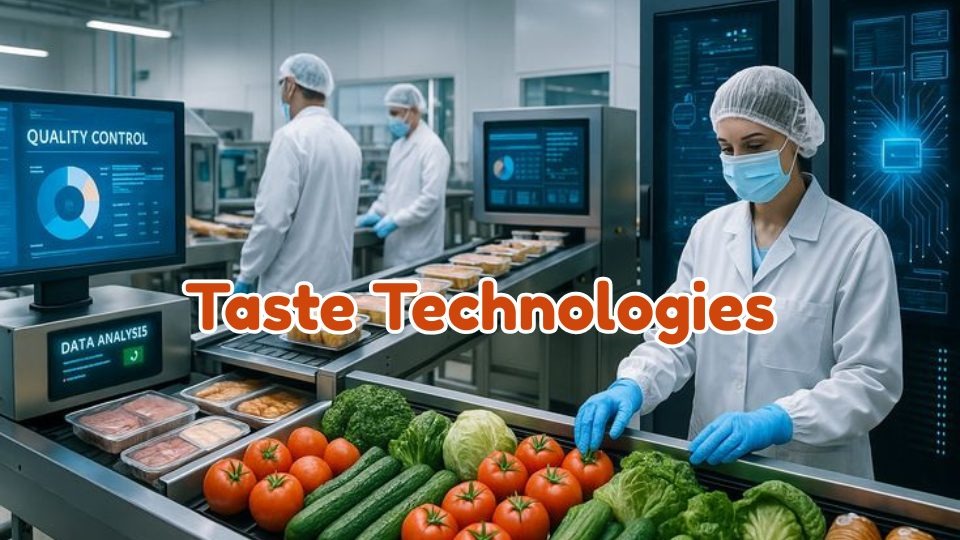
Biosensor technology enables rapid quality assessment across food manufacturing operations. Rather than relying solely on human taste panels requiring extensive time and resources, companies deploy these systems for consistent evaluation throughout production cycles. This sensory science innovation dramatically accelerates product development timelines.
Historical Development of Flavor Analysis Systems
Scientific attempts at mechanizing taste analysis began decades before current sophistication levels emerged. Early electronic tongue prototypes appeared in academic laboratories during the 1980s, though practical applications remained limited by computational constraints.
The 1990s brought significant advances as processing power increased exponentially. Researchers developed pattern recognition algorithms capable of distinguishing between wine varieties, detecting food spoilage, and identifying adulteration in premium products. These foundational systems established frameworks upon which modern taste technologies continue building.
The Artificial Intelligence Revolution
Machine learning transformed flavor analysis capabilities around 2015 when deep neural networks demonstrated unprecedented pattern recognition abilities. Companies like IBM deployed Watson for culinary applications, analyzing thousands of recipes to generate novel flavor combinations humans might never conceive independently.
Today, artificial intelligence in food extends far beyond simple analysis into creative generation. Algorithms trained on millions of successful recipes predict which ingredient combinations will appeal to specific demographic preferences. This food tech disruption fundamentally alters traditional product development approaches relying primarily on chef intuition.
Why Taste Technologies Matter for Modern Food Systems
Global food systems face mounting challenges including population growth, sustainability demands, and changing consumer preferences. Taste technologies offer solutions addressing multiple pressures simultaneously by enabling more efficient development processes and reduced waste through precise quality control.
Consumer expectations continue evolving toward personalized experiences across all product categories. Food represents no exception to this trend. Understanding individual flavor preferences at scale requires computational capabilities only taste technologies can provide.
Economic Impact on Food Industry
The global flavor and fragrance market exceeds 30 billion dollars annually with consistent growth projections. Companies investing in digital gastronomy capabilities position themselves advantageously within this expanding landscape. Early adopters report significant competitive advantages in speed to market and consumer satisfaction metrics.
- Product development cycles reduced from years to months through algorithmic flavor prediction and optimization
- Quality consistency improved across manufacturing facilities using standardized sensor based evaluation protocols
- Consumer rejection rates decreased through precise matching of products to target market preferences
- Ingredient costs optimized by identifying equally appealing alternatives at lower price points
- Sustainability enhanced through reduced trial batches and minimized food waste during development
Practical Applications Transforming the Industry
Taste technologies currently operate across diverse applications from beverage formulation to pharmaceutical taste masking. Coca Cola, PepsiCo, Nestle, and other multinational corporations maintain dedicated research divisions exploring these capabilities extensively.
Restaurant technology increasingly incorporates flavor analysis as well. High end establishments utilize sensory science innovation for menu development, ensuring dishes achieve precise flavor profiles matching chef intentions. Some establishments even offer personalized recommendations based on individual taste preference data.
Personalized Nutrition and Health Applications
The intersection of taste technologies and health optimization presents particularly promising opportunities. Individuals possess genetically determined taste sensitivities affecting food choices and nutritional behaviors. Understanding these variations enables truly personalized nutrition recommendations.
Companies developing personalized nutrition platforms utilize flavor profiling algorithms to suggest foods matching both health requirements and taste preferences. This approach dramatically improves dietary adherence compared to generic recommendations ignoring individual palatability factors. Patients following prescribed diets benefit significantly from these technologies applications.
Challenges Facing Widespread Adoption
Despite remarkable progress, significant obstacles remain before taste technologies achieve mainstream implementation. Replicating the full complexity of human flavor perception continues challenging researchers. Emotional associations, cultural contexts, and memory influences on taste experience resist easy quantification.
Cost barriers prevent smaller food companies from accessing sophisticated flavor analysis systems. While prices continue declining, substantial investment remains necessary for meaningful implementation. This creates potential market concentration favoring large corporations with greater resources.
Ethical Considerations and Consumer Trust
Food tech disruption raises legitimate concerns about manipulation and transparency. If algorithms can precisely engineer maximum palatability, questions arise about responsibility for potential overconsumption. Critics argue taste technologies could exacerbate existing public health challenges related to processed food consumption.
- Consumer awareness regarding algorithmic flavor optimization remains limited across most markets
- Regulatory frameworks lag technological capabilities creating governance gaps
- Data privacy concerns emerge as companies collect individual taste preference information
- Traditional culinary knowledge risks devaluation amid increasing technological reliance
- Small producers face competitive disadvantages against algorithmically optimized multinational products
Future Trajectory and Expected Developments
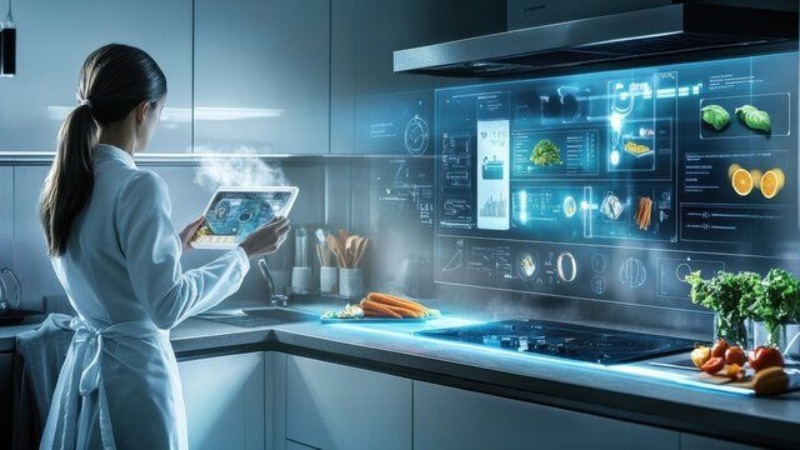
It will likely integrate increasingly with broader food system digitization over coming decades. Experts predict seamless connections between personal health monitoring devices, preference databases, and food preparation systems enabling unprecedented customization levels.
The convergence of artificial intelligence in food with biotechnology opens additional frontiers. Lab grown proteins optimized for specific flavor profiles represent active research areas. Digital gastronomy may eventually enable exact replication of any desired taste experience regardless of original ingredient sourcing.
As it matures, their influence on human eating behavior will expand correspondingly. Understanding this trajectory empowers consumers, industry professionals, and policymakers to shape outcomes benefiting society broadly rather than narrow commercial interests alone.
Conclusion:
The revolution driven by taste technologies is reshaping how humanity creates, analyzes, and experiences food at fundamental levels. Throughout this guide, we explored electronic tongue biosensors, artificial intelligence in food applications, and the remarkable potential of digital gastronomy for personalized nutrition development.
From accelerating product development cycles to enabling truly customized flavor experiences, these innovations address critical challenges facing global food systems. While obstacles including cost barriers and ethical considerations remain, the trajectory points toward increasingly sophisticated sensory science innovation.
As technologies continue advancing, staying informed empowers consumers and industry professionals to navigate this transformative landscape intelligently and responsibly.