Smart restaurant technology has quietly become the operating system of modern hospitality a layered mix of artificial intelligence, connected kitchen devices, cloud-based point-of-sale platforms, and guest-facing digital tools that together redefine how food reaches the table.
Walk into any well-run café, quick-service chain, or fine-dining room today and you’ll spot the signals: tablets at tables, QR menus on coasters, kitchen display screens barking tickets, and analytics dashboards glowing behind the bar. What looked like novelty five years ago is now table stakes.
Table of Contents
Why the Dining Industry Is Going Digital (And Why Now)
Three forces are colliding at once: squeezed margins, scarce labor, and a generation of diners who grew up swiping before speaking.
Deloitte’s 2024 Restaurant CXO Survey found that 88% of restaurant executives cite high input costs materials and labor as their top business pressure. Meanwhile, the National Restaurant Association’s 2024 Technology Landscape Report notes that 76% of operators believe tech is essential to staying competitive, yet only around 13% feel genuinely ahead of the curve.
Translation: almost every restaurateur knows they need to modernize. Most just aren’t sure where to start.
What Counts as a “Smart” Restaurant Anyway?
At its core, an intelligent dining operation is one where systems talk to each other. A guest scans a QR menu, which updates the inventory count, routes the order to the correct station on a kitchen display system, logs the choice in a customer profile, and triggers a personalized loyalty offer for the next visit all without a server retyping a thing.
This interconnected approach transforms isolated gadgets into what analysts call a connected restaurant ecosystem, combining hardware, software, and data analytics under one unified experience.
The Core Technologies Powering Modern Restaurants
Below is a concise reference map of the most widely adopted tools reshaping hospitality right now.
| Technology Layer | What It Does | Primary Advantage | Ideal Restaurant Type |
| Cloud POS Platforms | Centralized ordering, billing, and reporting | Real-time sales visibility across locations | All formats |
| AI Forecasting Tools | Predicts demand, labor needs, menu performance | Smarter scheduling, reduced waste | Mid-size to enterprise |
| Self-Service Kiosks | Contactless, guest-led ordering | Higher average ticket, faster lines | QSR and fast-casual |
| IoT Kitchen Gear | Smart ovens, fryers, sensors, thermostats | Consistency, energy savings | High-volume kitchens |
| Digital Menu Boards & QR Codes | Dynamic, mobile-friendly menus | Instant updates, zero print costs | Cafés, full-service |
| Inventory Management AI | Predictive stock and spoilage alerts | Lower food cost percentage | Every segment |
| Loyalty & CRM Software | Personalized rewards and retargeting | Repeat visits, larger lifetime value | Chains and independents |
| Robotics & Automation | Prep, cooking, delivery automation | Labor savings, speed | High-volume & ghost kitchens |
1. AI and Predictive Analytics in Hospitality
Artificial intelligence has graduated from marketing buzzword to legitimate profit lever. According to Deloitte’s 2025 report on AI in restaurants, roughly 82% of surveyed restaurant executives plan to grow AI spending this fiscal year with guest experience, operational efficiency, and loyalty programs topping their target list.
Practical applications include demand forecasting that predicts Friday-night burger counts based on weather and local events, dynamic pricing models, and voice-enabled drive-thru systems that take orders without a headset-wearing crew member.
2. Internet of Things (IoT) on the Line
Connected equipment is the quiet backbone of modern kitchens. Think refrigerators that text managers when a door is left open, fryers that auto-calibrate oil temperature, and dishwashers that modulate water flow by load size. These micro-automations compound into meaningful savings on utilities and spoilage every month.
3. Contactless Ordering and Digital Payments
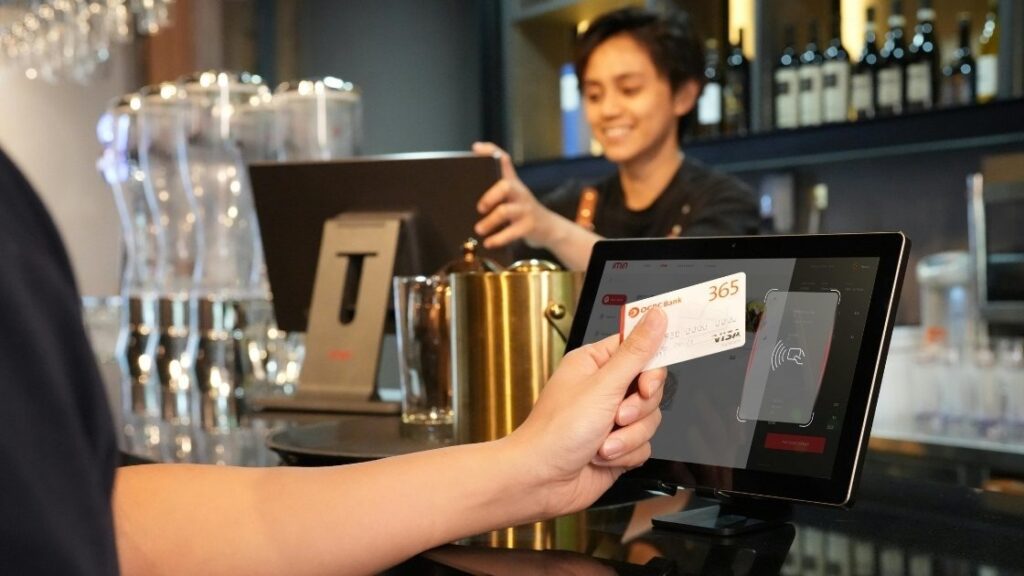
The pandemic didn’t invent contactless dining, but it certainly fast-tracked it. The National Restaurant Association reports that roughly 79% of consumers now prefer contactless or mobile payment options, with about 73% using digital wallets like Apple Pay, Google Wallet, or PayPal when dining out.
4. Robotics and Kitchen Automation
From flipper robots frying patties to automated salad-assembly lines, kitchen robotics is edging closer to practicality. Deloitte’s consumer research shows acceptance growing around 60% of surveyed diners say they’d order from a partially robotic kitchen, up from 54% just a few years earlier.
5. Self-Service Kiosks and Mobile Apps
Self-order terminals have proven to lift average check sizes meaningfully, partly because screens upsell more consistently than tired cashiers. Smartphone apps drive similar gains National Restaurant Association data suggests roughly 7 in 10 limited-service guests would use a branded app to place an order.
Real Benefits Operators Are Seeing
The payoff from adopting an intelligent dining ecosystem typically shows up in five measurable ways:
- Tighter margins through AI inventory control and dynamic labor scheduling
- Faster service via kiosks, tableside tablets, and streamlined kitchen display systems
- Higher guest satisfaction from personalization engines and loyalty integration
- Sharper decisions thanks to real-time dashboards replacing spreadsheet guesswork
- Resilience during labor shortages, since automation fills gaps without hiring
A brief real-world illustration: when a regional U.S. burger chain integrated an AI-powered inventory tool with its cloud POS, internal reporting later referenced in Fast Casual Magazine showed double-digit waste reduction and meaningful uplift in repeat visits driven by app-based rewards.
Honest Challenges You Should Plan For
No operator should pretend this transition is painless. The real friction points include:
- Upfront capital. Full-stack rollouts can cost tens of thousands for a single location.
- Integration headaches. Legacy systems rarely play nicely with new platforms.
- Cybersecurity risk. As payment data digitizes, attack surfaces grow the NRA reports roughly 43% of full-service operators prioritized security upgrades in 2024.
- Staff resistance. Veteran cooks and servers often distrust screens until training proves otherwise.
- Vendor lock-in. Choose platforms with open APIs to avoid future migration pain.
My pragmatic advice from years of watching rollouts: pilot one tool at one location, measure the ROI honestly, and scale only what proves itself.
How to Choose the Right Restaurant Tech Stack
A clear selection framework beats vendor hype every time. Ask yourself:
- What specific pain point am I solving slow service, food waste, thin margins, or guest retention?
- Does this tool integrate cleanly with my existing POS and accounting stack?
- What’s the total cost of ownership over three years, not just the sticker price?
- Does the vendor offer hospitality-grade support and training?
- Will my staff actually use it after the honeymoon phase?
Platforms like Toast, Square for Restaurants, Oracle Simphony, Lightspeed, and Clover dominate the North American market, each with slightly different strengths in reporting, integrations, and hardware flexibility.
Where the Industry Is Heading Next
The next five years will likely bring tighter convergence between generative AI assistants, computer-vision quality control, and hybrid cloud infrastructure designed specifically for hospitality. Publications like Restaurant Business Online regularly flag emerging experiments voice AI in drive-thrus, AR-powered menus, and sensor-driven sustainability tracking.
Expect sustainability-linked tech to accelerate, too. Smart water systems, waste-tracking sensors, and energy-efficient IoT appliances help meet both margin goals and the climate-conscious values of younger diners.
Final Thoughts: Don’t Get Left Behind
The transformation from analog to digital dining isn’t a future trend it’s already happened. What remains is execution. Operators who thoughtfully blend smart restaurant technology with genuine human hospitality will capture the next decade of guest loyalty and profit growth. Those who wait for perfect clarity before investing will find themselves perpetually playing catch-up.
Start with one high-impact layer a modern cloud POS, an AI inventory tool, or a self-service kiosk. Measure the difference. Train your team. Iterate.
Now your turn: Which tool would make the biggest difference in your restaurant right now smarter inventory, contactless ordering, or AI-driven forecasting? Drop your thoughts in the comments, share this guide with a fellow operator, and tell us what’s working (or failing) in your kitchen. Your real-world experience helps everyone raise their game.
Q1: What is smart restaurant technology in simple terms?
It’s a coordinated system of digital tools such as AI forecasting, cloud POS, IoT kitchen equipment, and contactless payments that share data in real time to run a restaurant more efficiently. The aim is smoother operations and happier guests without adding staff or guesswork.
Q2: How much should a small restaurant budget for modern tech?
Monthly costs usually range from a few hundred dollars for a basic cloud POS to several thousand for fuller AI, kiosk, and IoT integration. Most independent operators recoup their investment within one to two years through waste reduction, higher ticket sizes, and faster table turnover.
Q3: Which technology delivers the fastest return on investment?
For most independents, a modern cloud-based point-of-sale paired with a QR code digital menu offers the quickest win. These tools cut printing and training costs, speed up service, and immediately generate guest data you can use for marketing.
Q4: Will automation replace restaurant workers?
Not in any foreseeable way. Deloitte’s consumer research consistently shows diners still value human warmth for core moments. Automation mostly absorbs repetitive back-office tasks scheduling, inventory counts, prep work freeing staff to focus on hospitality and creativity.
Q5: How does intelligent tech help reduce food waste?
AI-powered inventory platforms forecast usage from historical sales and external signals like weather or local events, preventing overordering. Connected refrigeration and sensor-driven storage monitor temperature and expiration, alerting teams before spoilage occurs.
Q6: Are restaurant tech platforms safe from cyberattacks?
Security depends heavily on vendor choice and staff habits. Reputable platforms use encryption, PCI-DSS compliance, and regular patching to protect payment data. Restaurants should also train employees on phishing, enforce strong passwords, and keep software updated.