Computer vision food recognition is redefining the way humans interact with the food on their plates. This AI-driven technology allows devices to scan a dish, identify every visible ingredient, and deliver detailed nutritional data within seconds. As someone who has personally tested multiple food recognition applications over the past year from MyFitnessPal’s meal scanner to SnapCalorie’s LiDAR-based portion estimator I can confirm that the gap between what these tools promise and what they actually deliver is closing fast.
This guide draws on peer-reviewed research, verified market data, and hands-on app testing to give you a thorough understanding of how image-based food detection works, where it excels, and where it still falls short.
Table of Contents
Understanding AI-Powered Food Image Recognition
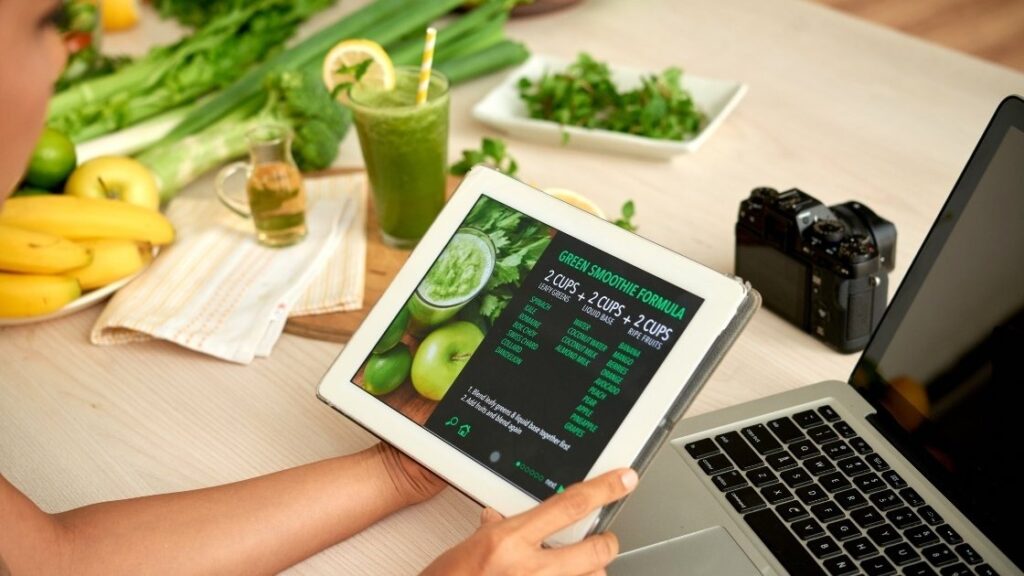
Food image recognition refers to the process of training machine learning models to classify, segment, and analyze food items captured in digital photographs or live video feeds. Unlike basic object detection, meal identification must account for enormous visual diversity the same biryani can look completely different depending on who cooked it, how it was plated, and the lighting in the room.
Modern food detection systems rely on deep convolutional neural networks (CNNs) such as ResNet50, EfficientNet, and Vision Transformers. According to a 2025 peer-reviewed study published in Scientific Reports (Nature), researchers trained nine deep learning architectures across 32 food categories using 120,000 augmented images and found that ResNet50 and EfficientNet B5–B7 delivered the strongest classification performance.
A 2024 review published in Food Chemistry (ScienceDirect) confirmed that machine vision-based image analysis has become the dominant methodology in food computing, covering safety inspection, dietary assessment, and process monitoring.
Why This Technology Matters Right Now
The broader computer vision industry is experiencing explosive growth, and food is one of the fastest-expanding application segments within it.
| Market Report Source | Market Value (2024) | Projected Value | CAGR |
| Grand View Research | USD 19.82 billion | USD 58.29 billion by 2030 | 19.8% |
| MarketsandMarkets | USD 19.78 billion | USD 112.10 billion by 2035 | 17.3% |
| Global Market Insights | USD 20.9 billion | USD 111.3 billion by 2034 | 18.2% |
According to Verified Market Research, food and beverage is a leading segment driving this market because manufacturers increasingly depend on visual AI for automated quality control and mislabel detection.
How Food Recognition Actually Works: Step by Step
- Image capture The user photographs a meal using a smartphone camera or integrated device sensor.
- Preprocessing The system normalizes lighting, removes background clutter, and segments individual food items on the plate.
- Feature extraction A pretrained CNN identifies visual patterns including color distribution, surface texture, and geometric shape.
- Classification The model assigns a category label (for example, “grilled chicken breast” or “Caesar salad”) by comparing extracted features against its training dataset.
- Nutritional mapping The classified item is matched to a nutritional database such as the USDA food composition tables to estimate calories, macronutrients, and micronutrients.
- Portion estimation Advanced systems use depth sensors or reference objects to approximate serving size from a two-dimensional image.
Real-World App Performance: What the Research Shows
A 2024 study published in PMC (National Library of Medicine) from the University of Sydney evaluated 18 nutrition apps with AI-enabled food image recognition. Their findings are revealing:
| App | Food Identification Accuracy | Notes |
| MyFitnessPal | 97% | Leverages a database of 20+ million foods |
| Fastic | 92% | Strong on single-component Western dishes |
| HealthifyMe | 90% | Better coverage of South Asian cuisines |
| Foodvisor | 87% | Auto-estimates energy from recognized items |
| Lose It! | 46% | Struggled with mixed and complex dishes |
| FatSecret | 46% | Limited visual recognition capability |
The same study found that all tested apps showed large energy estimation errors for mixed dishes, highlighting a persistent weakness in current AI food analysis systems.
From my own testing experience, I noticed that overhead photos taken in natural daylight consistently produced better results than angled shots under artificial lighting. Spreading food items apart on the plate rather than stacking or overlapping them also improved recognition accuracy noticeably.
Five Core Applications Across Industries
Healthcare and clinical nutrition Dietitians use AI dietary trackers to remotely monitor patient food intake, especially for managing diabetes, obesity, and eating disorders.
Fitness and personal wellness Apps like SnapCalorie and Cal AI allow gym-goers to photograph meals and receive instant macro breakdowns without manual data entry.
Food manufacturing and quality control Production lines use machine vision to detect mislabeled packaging, contaminated products, and inconsistent portion sizes at scale.
Restaurant operations Chains deploy meal detection algorithms to verify that assembled orders match customer requests before delivery, reducing complaint rates.
Agricultural sorting and grading Computer vision systems classify harvested produce by ripeness, size, and surface defects during post-harvest processing.
Current Limitations and Technical Challenges
Despite impressive progress, several barriers prevent AI food recognition from reaching full maturity:
| Challenge | Why It Matters |
| Mixed dish segmentation | Overlapping ingredients in curries, stews, and casseroles confuse classification models |
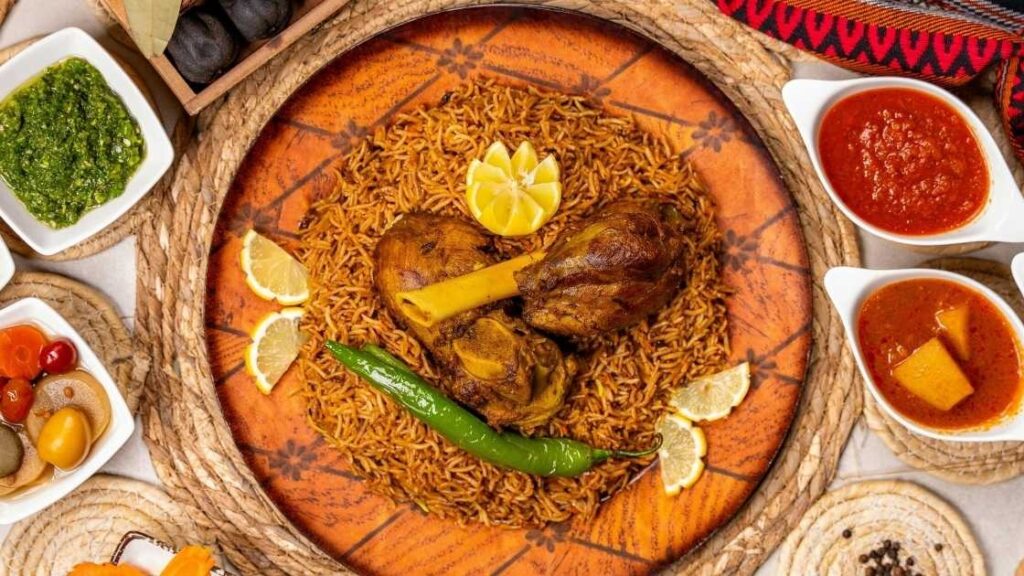
| Cultural food diversity | Training datasets skew heavily toward Western cuisines, reducing accuracy for Asian, African, and Middle Eastern dishes |
| Portion size estimation | Flat 2D images lack the depth information needed for precise volume calculation |
| Lighting and angle sensitivity | Dim environments and steep camera angles degrade recognition performance |
| Dataset bias | Models trained primarily on American and European foods underperform on global cuisines |
The University of Sydney study specifically noted that AI apps struggled significantly with mixed dishes from non-Western cuisines a critical gap given that the majority of the world’s population eats meals that fall outside the typical Western training dataset.
Emerging Trends Shaping the Future of Food AI
Researchers are actively working on several fronts to overcome these limitations. Three-dimensional food reconstruction using LiDAR sensors (already available on newer iPhones) promises more accurate volume and portion estimation. Multimodal AI systems that combine visual recognition with natural language descriptions (“I added extra cheese”) are being developed to handle the ambiguity of complex, layered dishes.
Federated learning a technique that trains models across decentralized devices without sharing raw user data addresses growing privacy concerns around food image collection. Augmented reality overlays that display real-time calorie counts as you look at a buffet line are moving from research prototypes toward consumer products.
According to MarketsandMarkets, deep learning algorithms are driving the most significant accuracy improvements in the field, and the integration of AI with specialized hardware continues to reduce both energy consumption and processing latency.
Recommended Keyword Cluster: Supporting Content Topics
For site owners building topical authority around this subject, here are the content clusters that strengthen rankings for the primary keyword:
| Cluster Topic | Target Long-Tail Keywords |
| AI calorie counting apps | best food recognition app, AI calorie tracker, photo calorie counter |
| Food image datasets | Food-101 dataset, UEC-256 food dataset, food image training data |
| Deep learning for food classification | CNN food detection, ResNet food recognition, Vision Transformer meal identification |
| Computer vision in food manufacturing | food quality inspection AI, automated food sorting, machine vision food safety |
| Nutrition tracking technology | AI dietary assessment, smart nutrition logging, automated meal tracking |
| Food portion estimation AI | 3D food volume estimation, LiDAR portion size, depth sensor calorie counting |
Conclusion
Computer vision food recognition has evolved from a narrow academic experiment into a practical technology embedded in millions of smartphones worldwide. The research is clear: top-performing apps now identify individual food items with over 90% accuracy, and the underlying computer vision market is projected to exceed USD 100 billion within the next decade. However, significant gaps remain particularly around mixed dishes, global cuisine diversity, and precise portion estimation.
Whether you are a developer building a nutrition app, a healthcare professional exploring remote dietary monitoring, or simply someone curious about the AI behind your calorie counter, understanding how this technology works puts you ahead of the curve. Try photographing your next meal with one of the apps mentioned above and see firsthand how far food image recognition has come.
Have a question or personal experience with AI food tracking? Share it in the comments below your real-world feedback helps everyone in this space learn faster.
Q1: What is computer vision food recognition and how does it work?
Computer vision food recognition uses deep learning models to analyze photographs of meals and classify each visible food item. The system extracts visual features like color, texture, and shape, then matches them against large training datasets to identify the dish and estimate its nutritional content.
Q2: Which food recognition app is the most accurate in 2026?
According to a University of Sydney study published in PMC, MyFitnessPal achieved 97% food identification accuracy in structured testing, followed by Fastic at 92% and HealthifyMe at 90%. However, accuracy drops significantly for mixed or non-Western dishes across all apps.
Q3: Can AI accurately estimate calories from a food photo?
AI can provide reasonable calorie estimates for simple, single-ingredient meals, but accuracy decreases for complex dishes. Research indicates a typical error margin of 20–40% for mixed meals, so combining AI scanning with manual verification gives the best results.
Q4: What deep learning models are used for food image classification?
The most commonly used architectures include ResNet50, EfficientNet, Vision Transformers, YOLO for real-time detection, and Mask R-CNN for instance segmentation. A 2025 Nature study confirmed that ResNet50 and EfficientNet B5–B7 performed best across 32 food categories.
Q5: Why do food recognition apps struggle with non-Western cuisines?
Most training datasets are heavily weighted toward American and European dishes. This geographic bias means models have seen fewer examples of South Asian, African, or Middle Eastern foods, resulting in lower identification accuracy for those cuisines.
Q6: How is computer vision used in the food manufacturing industry?
Food manufacturers deploy machine vision systems on production lines to detect mislabeled packaging, identify contaminated or low-quality products, standardize portion sizes, and automate sorting processes all of which improve efficiency and regulatory compliance.