Indoor agriculture technology is quietly reshaping how fresh food reaches our plates, making it possible to grow nutritious crops year-round without depending on weather, soil, or vast open farmland. Whether you are someone who cares deeply about what you eat or a tech enthusiast curious about the next wave of innovation, this shift in modern farming deserves your attention.
Over the past few years, advances in vertical farming, hydroponic systems, and controlled environment agriculture have turned warehouses, shipping containers, and even small apartment corners into productive growing spaces. These are not just experimental setups anymore. Major cities around the world are adopting smart farming solutions to tackle food security challenges, reduce transportation costs, and deliver fresher produce to local communities.
What makes indoor agriculture technology truly exciting is how it blends science, engineering, and sustainability into one package. Sensors monitor every detail of a plant’s environment, LED lighting mimics ideal sunlight conditions, and automated nutrient delivery systems ensure consistent growth. The result is higher crop yields, minimal water waste, and food that often tastes better because it is harvested at peak freshness.
This article will walk you through the most important trends shaping indoor agriculture technology today. From AI-powered crop monitoring to the rise of urban farming startups, you will discover how these innovations are bridging the gap between technology and taste. Whether you are a home grower, a foodie, or someone exploring the future of precision agriculture, this guide is designed to give you a clear and practical understanding of where the industry is heading and why it matters to your everyday life.
What Is Indoor Agriculture Technology and Why Does It Matter?
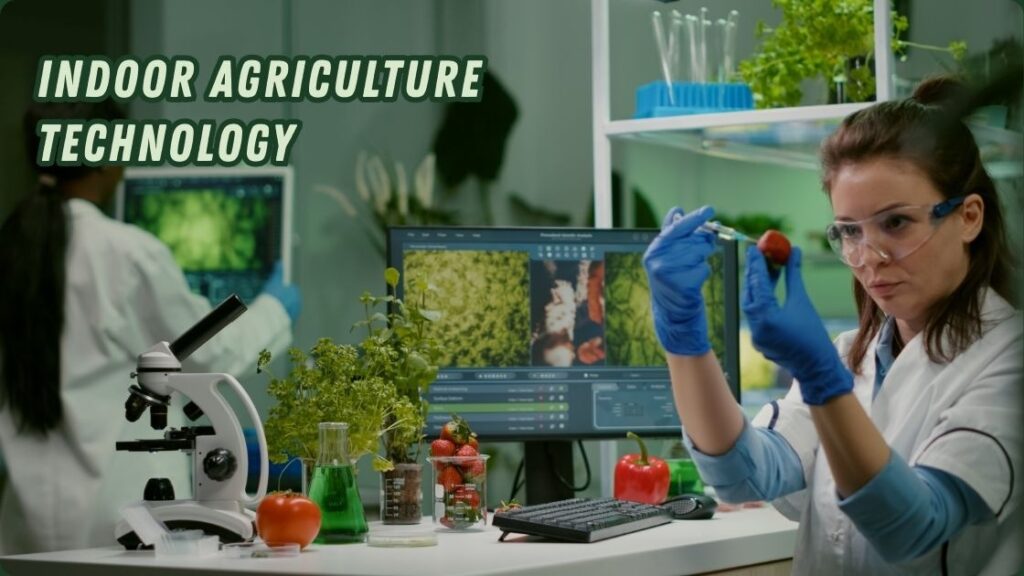
Indoor agriculture technology refers to the use of advanced systems and tools that allow crops to be grown inside controlled environments rather than traditional outdoor fields. These setups range from large commercial vertical farms to compact home growing units that fit in a kitchen. The core idea is simple: control every factor that affects plant growth, including light, temperature, humidity, and nutrients, so that crops can thrive regardless of external conditions.
This approach to farming has gained serious momentum over the last decade. As global populations rise and arable land shrinks, indoor agriculture technology offers a practical path toward food security. It reduces the dependency on seasonal cycles, eliminates most pesticide use, and significantly cuts water consumption compared to conventional farming. For food lovers, this means fresher produce with better flavor. For tech enthusiasts, it represents one of the most exciting intersections of engineering and biology.
A Brief History and Evolution of Indoor Farming
The concept of growing plants indoors is not new. Greenhouse cultivation has existed for centuries, but modern indoor agriculture technology truly began taking shape in the late 20th century. Early experiments with hydroponics and artificial lighting laid the groundwork for what we see today.
From Greenhouses to Smart Farms
The transition from basic greenhouses to fully automated indoor farms happened gradually. In the 1990s, researchers in Japan and the Netherlands began developing closed environment farming systems. By the 2010s, companies like AeroFarms and Plenty had scaled these ideas into commercial operations. Today, indoor agriculture technology incorporates artificial intelligence, machine learning, and IoT sensors to manage every aspect of crop production with minimal human intervention.
How Indoor Agriculture Technology Works
Understanding the mechanics behind indoor farming helps appreciate why it is so effective. At its core, indoor agriculture technology replaces natural growing conditions with engineered alternatives that can be fine tuned for each crop type.
Controlled Environment Agriculture
Controlled environment agriculture (CEA) is the foundation of most indoor farming operations. Temperature, humidity, CO2 levels, and airflow are constantly monitored and adjusted through automated climate control systems. This creates an ideal growing environment that remains consistent throughout the year, eliminating crop failures caused by droughts, storms, or frost.
Lighting and Energy Systems
Since sunlight is unavailable indoors, LED grow lights serve as the primary energy source for photosynthesis. Modern LED technology has become remarkably efficient, offering full spectrum lighting that can be customized based on the growth stage of each plant. Some systems use solar powered energy grids to reduce operating costs and environmental impact.
Nutrient Delivery Methods
Plants grown indoors receive nutrients through soilless systems. The three most common methods are:
- Hydroponics delivers nutrient rich water solutions directly to plant roots through a recirculating system.
- Aeroponics suspends roots in air and mists them with nutrient solutions at regular intervals.
- Aquaponics combines fish farming with plant cultivation, using fish waste as a natural fertilizer.
- Substrate based systems use materials like coconut coir or perlite to anchor roots while delivering liquid nutrients.
- Deep water culture keeps roots submerged in oxygenated, nutrient enriched water for continuous feeding.
Each method has its strengths, and the choice depends on the crop type, scale of operation, and budget.
Key Benefits of Indoor Agriculture Technology
The advantages of growing food indoors go far beyond convenience. Indoor agriculture technology addresses several pressing challenges facing the global food system today.
Higher Yields and Faster Growth
Because every environmental variable is optimized, crops grown indoors often mature faster and produce higher yields per square foot than their outdoor counterparts. Vertical farming, in particular, stacks multiple growing layers to maximize space efficiency, making it ideal for urban areas where land is expensive.
Water Conservation and Sustainability
Indoor farming systems use up to 95% less water than traditional agriculture. Closed loop hydroponic and aeroponic setups recirculate water, minimizing waste. This makes indoor agriculture technology especially valuable in regions facing water scarcity.
Fresher and Healthier Produce
Because indoor farms can operate within cities, the distance from farm to table shrinks dramatically. Produce harvested from a local vertical farm can reach consumers within hours rather than days. This means better taste, higher nutritional value, and a significantly smaller carbon footprint from reduced transportation.
Challenges and Limitations to Consider
Despite its promise, indoor agriculture technology does face real obstacles that must be acknowledged.
- High startup costs make it difficult for small entrepreneurs to enter the market without significant investment.
- Energy consumption remains a concern, especially for operations that rely heavily on artificial lighting and climate control.
- Limited crop variety is a current drawback, as leafy greens and herbs dominate most indoor farms while staple grains remain impractical.
- Technical expertise is required to manage complex systems, creating a skills gap in the workforce.
- Scalability issues mean that feeding entire populations through indoor farming alone is not yet feasible.
Addressing these challenges will require continued innovation in renewable energy integration, automation, and crop science research.
Emerging Trends Shaping the Future
The next wave of indoor agriculture technology is being driven by several exciting developments. AI powered monitoring systems now analyze plant health in real time, predicting issues before they affect crop quality. Robotics are handling planting, harvesting, and packaging tasks with increasing precision. Gene editing tools like CRISPR are being explored to develop crop varieties specifically optimized for indoor growing conditions.
The Role of Urban Farming Startups
Across major cities worldwide, urban farming startups are making indoor agriculture technology more accessible. Companies are offering modular growing units for restaurants, grocery stores, and even home kitchens. This decentralized model empowers consumers to participate in food production, closing the gap between technology and everyday life.
Practical Tips for Getting Started
If you are interested in exploring indoor agriculture technology on a personal level, starting small is the best approach. Compact hydroponic kits and smart indoor gardens are widely available and require no farming experience. Begin with easy to grow herbs like basil or mint, learn the basics of nutrient management and lighting schedules, and gradually expand your setup as your confidence grows. The learning curve is manageable, and the reward of harvesting your own fresh produce at home is well worth the effort.
Conclusion
The way we grow and consume food is undergoing a fundamental transformation, and indoor agriculture technology sits at the heart of this change. From vertical farming and hydroponic systems to AI powered crop monitoring and automated nutrient delivery, the innovations discussed throughout this article highlight a future where fresh, nutritious food is accessible to everyone regardless of geography or season.
What makes indoor agriculture technology so compelling is its ability to solve multiple problems at once. It conserves water, reduces the need for harmful pesticides, shortens supply chains, and delivers produce that is fresher and more flavorful than what traditional farming often provides. For food lovers, this means better ingredients on the plate. For tech enthusiasts, it represents a rapidly evolving field filled with opportunities for innovation and entrepreneurship.
Of course, challenges like high energy costs, limited crop diversity, and scalability concerns still need attention. However, the pace of progress in controlled environment agriculture, smart farming solutions, and urban farming startups suggests that these barriers will continue to shrink as technology matures and becomes more affordable.
Whether you are a consumer who values sustainability, a professional exploring precision agriculture, or someone simply curious about where your food comes from, indoor agriculture technology is a space worth watching closely. The convergence of science, engineering, and food production is not a distant vision. It is happening right now, and its impact on our kitchens, communities, and planet will only grow deeper in the years ahead.