Pre workout and insomnia share a direct, research-proven connection that most fitness enthusiasts severely underestimate. If your evening training sessions leave you staring at the ceiling for hours, the stimulants packed inside your supplement are almost certainly responsible.
Here is the core problem: the same compounds that sharpen your focus and spike your energy during a workout do not shut off when you rack the weights. They linger in your bloodstream, block your brain’s natural sleep-promoting signals, and chip away at the deep recovery phases your muscles depend on.
A 2025 study published in Sleep Epidemiology by researchers at the University of Toronto analyzed data from thousands of participants aged 16 to 30 and found that individuals who consumed pre workout supplements within the prior year were more than twice as likely to report sleeping five hours or fewer each night. That finding alone should change how you think about your pre workout routine.
This guide walks you through the science behind pre workout-related sleep disruption, identifies the specific ingredients responsible, explains the damage poor sleep inflicts on your fitness progress, and provides evidence-based strategies to reclaim your rest without abandoning your training edge.
Table of Contents
What Exactly Causes Pre Workout Insomnia?
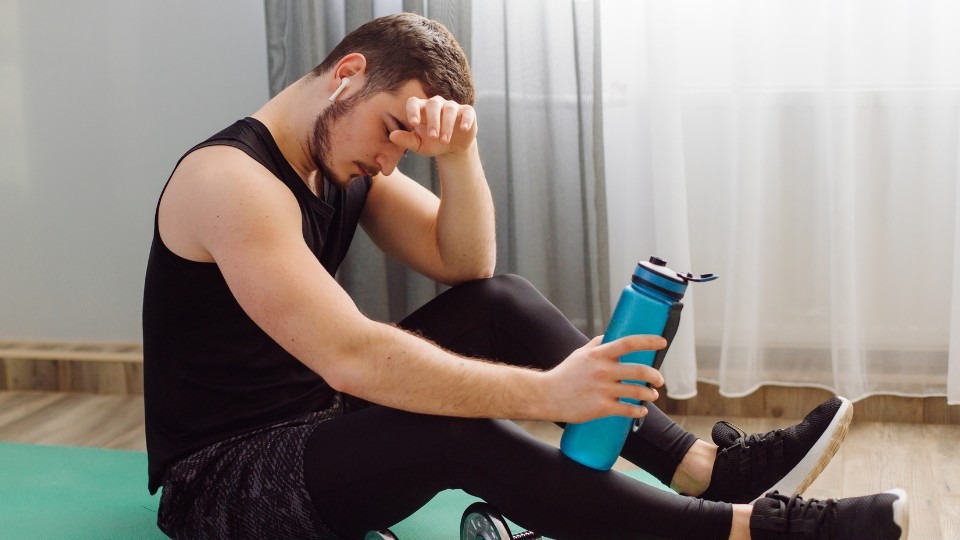
Pre workout supplements trigger insomnia because their active stimulant compounds keep your central nervous system in a state of heightened arousal long after your training session ends. Your brain cannot transition into the relaxation mode required for sleep onset while those chemicals remain active.
Most popular pre workout formulas are engineered to deliver rapid energy, increased alertness, and enhanced endurance. Those physiological effects depend on stimulating your nervous system and that stimulation does not conveniently disappear the moment you walk out of the gym.
Caffeine: The Primary Sleep Saboteur in Pre Workout Supplements
Caffeine is far and away the biggest contributor to pre workout sleep disruption. It works by attaching to adenosine receptors in your brain. Adenosine is a chemical that builds up throughout the day and promotes sleepiness, and caffeine blocks it, creating a state of sustained alertness.
What makes this especially problematic for evening trainers is caffeine’s remarkably long duration of action. A comprehensive 2023 systematic review and meta-analysis published in Sleep Medicine Reviews found that caffeine consumption reduced total sleep time by 45 minutes and sleep efficiency by 7 percent, while also increasing the time needed to fall asleep by 9 minutes and wakefulness after sleep onset by 12 minutes.
That same meta-analysis delivered a striking recommendation: to avoid meaningful reductions in total sleep time, a standard serving of pre workout supplement containing approximately 217 mg of caffeine should be consumed at least 13.2 hours before bedtime. For someone who goes to bed at 10 p.m., that means finishing their pre workout before 8:50 in the morning.
Lead researcher Kyle T. Ganson of the University of Toronto has noted that popular pre workout products commonly deliver between 90 and 350 mg of caffeine per serving substantially more than a standard cup of coffee at around 100 mg.
Beyond Caffeine: Other Pre Workout Ingredients That Disrupt Sleep
Caffeine rarely acts alone inside a pre workout formula. Several other common ingredients compound the sleep-disrupting effect:
| Ingredient | Mechanism of Sleep Disruption |
| Synephrine | Functions as an adrenaline mimic, sustaining elevated heart rate and nervous system activation |
| Yohimbine | Stimulates the sympathetic nervous system and may heighten anxiety responses at night |
| Beta-Alanine (high doses) | Produces paresthesia (skin tingling) that can make physical relaxation difficult |
| High-dose Vitamin B6 & B12 | Accelerate cellular energy metabolism, potentially extending wakefulness into evening hours |
| Theobromine | A cocoa-derived stimulant with milder but still measurable effects on sleep onset |
A 2025 systematic review published in the journal Sports noted that pre workout formulations commonly combine caffeine at doses of 150 to 400 mg alongside additional compounds like taurine, beta-alanine, and citrulline, creating complex pharmacological profiles with unknown sleep implications. In plain terms, researchers still do not fully understand how all of these ingredients interact to affect your rest.
The CYP1A2 Gene: Why Some People Are Hit Harder
Not everyone metabolizes caffeine at the same rate. Variations in the CYP1A2 gene the primary enzyme responsible for breaking down caffeine in the liver create significant differences between individuals.
A randomized clinical crossover trial published in SLEEP (Oxford Academic) found that consumers often cannot detect caffeine-induced sleep fragmentation when consumption occurs several hours before bedtime, even though objective measurements clearly show disruption. Slow metabolizers may experience stimulant effects lasting well into the night from a dose taken hours earlier, and they may not even realize the connection.
How Pre Workout Insomnia Undermines Your Fitness Results
Losing sleep after a training session does far more than leave you groggy. It actively reverses the physiological adaptations your workout was designed to create.
Growth Hormone and Deep Sleep: The Muscle-Building Connection
Your body performs most of its muscular repair work during deep, non-REM sleep stages. A 2025 study published in Cell by researchers at UC Berkeley mapped the specific brain circuits that regulate growth hormone release during sleep and uncovered a feedback mechanism in which sleep drives growth hormone production, and growth hormone in turn regulates wakefulness.
As researcher Daniel Silverman explained, this system operates as a tightly balanced loop where insufficient sleep directly reduces growth hormone release, and that balance is essential for growth, repair, and metabolic health.
When stimulant-driven insomnia cuts into your deep sleep phases, your body produces less growth hormone. Less growth hormone means slower muscle protein synthesis, reduced tissue repair, and impaired fat metabolism precisely the opposite of what you trained for.
The Catabolic Cascade of Poor Sleep
Research published in Medical Hypotheses (PubMed) has outlined how sleep deprivation increases cortisol secretion while simultaneously reducing testosterone and Insulin-like Growth Factor 1, creating a highly catabolic hormonal environment that favors muscle breakdown over muscle building.
A 2025 comprehensive review in the Journal of Clinical Medicine confirmed that insufficient slow-wave sleep disrupts growth hormone secretion and alters cortisol levels, impairing post-exercise muscle recovery while also promoting inflammatory processes through elevated pro-inflammatory cytokines.
In practical terms: pre workout insomnia does not just make your next session feel harder it biologically limits your capacity to recover, adapt, and grow stronger.
Optimal Pre Workout Timing to Protect Your Sleep
The single most impactful adjustment you can make is controlling when you consume your stimulant-containing supplement.
Based on the 2023 Sleep Medicine Reviews meta-analysis, the cutoff time for a standard pre workout serving is approximately 13.2 hours before bedtime to avoid statistically meaningful reductions in total sleep time, while coffee should be consumed at least 8.8 hours before bed.
Here is what that looks like in practical terms:
| Target Bedtime | Latest Pre Workout Dose (~217 mg caffeine) | Latest Coffee (~107 mg caffeine) |
| 9:00 PM | 7:48 AM | 12:12 PM |
| 10:00 PM | 8:48 AM | 1:12 PM |
| 11:00 PM | 9:48 AM | 2:12 PM |
| 12:00 AM | 10:48 AM | 3:12 PM |
If you train in the afternoon or evening, a caffeinated pre workout is mathematically incompatible with healthy sleep for most individuals.
Reduce Your Dose Before You Eliminate It
Before switching products entirely, experiment with lowering your serving size. Many lifters discover that half a scoop delivers sufficient performance enhancement while clearing their system meaningfully faster. Track your sleep quality for two weeks at the reduced dose use a wearable device if possible and assess the difference objectively.
Stimulant-Free Pre Workout: A Legitimate Alternative for Night Trainers
Stimulant-free pre workout formulas have evolved substantially and now contain ingredients with strong research support for performance enhancement none of which interfere with sleep architecture.
The following compounds deliver measurable training benefits without touching your brain’s alertness pathways:
- Citrulline Malate Boosts nitric oxide production and enhances blood flow, delivering stronger muscle pumps and improved endurance without any stimulant effect
- Creatine Monohydrate One of the most thoroughly researched supplements in sports nutrition; enhances ATP regeneration for improved power and strength output with zero impact on sleep
- Beta-Alanine (moderate dose, 1.6–3.2g) Buffers hydrogen ion accumulation in working muscles, delaying fatigue during high-intensity sets
- Betaine Anhydrous Research in the Journal of the International Society of Sports Nutrition associates it with improvements in power output and training volume
- Taurine An amino acid that may actually support relaxation while simultaneously benefiting exercise performance and hydration
- L-Theanine (paired with low-dose caffeine for morning sessions) Channels caffeine’s energy toward focused performance while smoothing out jittery side effects
A practical approach many experienced athletes use: save your caffeinated formula exclusively for morning training sessions and switch to a stimulant-free option for any workout that begins after early afternoon.
Sleep Hygiene Strategies for Athletes Who Use Pre Workout
Even after optimizing your supplement timing, targeted sleep hygiene practices multiply the benefit.
Build a Non-Negotiable Wind-Down Protocol
Your nervous system requires consistent signals that the day is ending. Dim household lights one to two hours before bed. Eliminate screen exposure or use blue-light filtering during that window. Keep your sleeping environment between 60°F and 67°F (15.5°C–19.5°C) research consistently identifies this range as optimal for initiating and sustaining deep sleep.
Explore Natural Sleep-Support Compounds
Several natural compounds have demonstrated sleep benefits in controlled research settings.
A 2024 randomized, double-blind, placebo-controlled crossover trial (published in Medical Research Archives) found that magnesium supplementation at 1 gram per day for two weeks produced significant improvements in sleep duration, deep sleep time, sleep efficiency, and heart rate variability compared to placebo.
A separate 2024 randomized controlled trial on magnesium L-threonate found that participants taking the supplement maintained strong sleep quality and daytime functioning over three weeks, while the placebo group experienced measurable declines.
Additionally, a systematic review and meta-analysis of magnesium supplementation in older adults with insomnia found that magnesium reduced sleep onset latency by approximately 17 minutes compared to placebo.
These compounds pair well alongside a pre workout regimen because they address the recovery side of your performance equation the part most gym-goers neglect.
Track Your Sleep With Objective Data
Subjective feelings about sleep quality are notoriously unreliable. Research has shown that people often fail to perceive caffeine-induced sleep fragmentation, even when objective measurements reveal significant disruption.
Wearable sleep trackers from brands like Whoop, Oura, and Garmin provide objective metrics deep sleep percentage, total sleep time, sleep efficiency, and heart rate variability that reveal patterns you simply cannot feel. If your deep sleep drops consistently on training days, your supplement timing or formula needs adjustment.
When Pre Workout Insomnia Requires Professional Attention
If you have shifted your caffeine cutoff time, reduced your dosage, switched to stimulant-free options for evening sessions, and practiced disciplined sleep hygiene for four or more weeks without meaningful improvement, consult a healthcare provider.
Chronic insomnia that persists beyond supplement adjustments may stem from underlying conditions including anxiety disorders, hormonal imbalances, or sleep apnea that no amount of timing optimization will resolve. Medical evaluation becomes especially important if your sleep problems predate your supplement use or extend to rest days.
Key Takeaways: Balancing Pre Workout Energy With Quality Sleep
Pre workout and insomnia are not an inevitable pairing. The relationship is driven by specific, controllable variables primarily caffeine dose and timing and the research offers clear, actionable guidance.
Your muscles do not grow in the gym. They grow during deep sleep, when growth hormone surges, cortisol drops, and protein synthesis accelerates. Every night of stimulant-disrupted sleep chips away at those processes, turning your hard training into diminishing returns.
Three changes will make the biggest difference: move your caffeinated pre workout to morning sessions only, switch to a stimulant-free formula for afternoon and evening training, and build a consistent pre-sleep routine that signals your nervous system to power down.
Start with one adjustment this week. Track the results. Your recovery and your long-term progress depends on it.
If this article changed how you think about your supplement timing, share it with your training partner. The person crushing late-night gym sessions on 350 mg of caffeine probably needs to read this.
Can pre workout cause insomnia even when taken in the morning?
For most people, a morning dose clears the body in time for sleep. However, individuals who carry slow-metabolizer variants of the CYP1A2 gene process caffeine significantly more slowly, meaning even a morning serving can leave enough active stimulant to delay sleep onset. If morning sessions still correlate with poor sleep, testing a stimulant-free formula can help isolate the cause.
How many hours before bed should I stop taking pre workout?
A 2023 meta-analysis in Sleep Medicine Reviews calculated that a standard pre workout dose of roughly 217 mg of caffeine should be consumed at least 13.2 hours before bedtime to prevent statistically meaningful sleep loss. For a 10 p.m. bedtime, that means your last pre workout serving should land before approximately 8:50 a.m.
Does stimulant-free pre workout actually work for performance?
Yes. Ingredients like citrulline malate, creatine monohydrate, and beta-alanine each carry substantial evidence for improving strength, endurance, and training volume entirely independently of caffeine. Many competitive athletes rely on stimulant-free formulas for evening sessions and report no reduction in workout quality.
How does pre workout insomnia affect muscle growth specifically?
Sleep deprivation impairs muscle growth through multiple pathways. Deep sleep stages trigger surges in growth hormone and testosterone both essential for protein synthesis and tissue repair. Research shows that insufficient sleep elevates cortisol, reduces anabolic hormones, and promotes a catabolic state that favors muscle breakdown over growth.
Can melatonin cancel out the effects of pre workout caffeine?
Melatonin supports sleep onset by signaling your circadian clock, but it does not neutralize active caffeine blocking adenosine receptors in your brain. Taking melatonin alongside a stimulant is like pressing the accelerator and brake at the same time the stimulant wins in most cases. Addressing the caffeine source directly is always more effective.
Is it safe to take a sleep supplement and pre workout on the same day?
Taking a sleep-support compound like magnesium glycinate at night and a pre workout in the morning is generally considered safe for healthy adults, as the two serve opposite ends of your daily performance cycle. However, combining sedating supplements with stimulants within a narrow time window is not recommended. Consult a healthcare provider if you take prescription medications or have underlying health conditions.